Ship direct to source. Keep more of the value per tonne.
Every handler a consignment passes through takes a margin and adds handling cost. RAW TG ships battery materials direct to the processor that pays best for the grade — one optimised route, with the documentation and safe movement handled end to end.
One deliberate movement from source to processor.
The route is planned around value, safety and documentation before the material leaves site. The animation shows the trade moving as one controlled consignment rather than passing through a chain of handlers.
- Source qualified and documents prepared.
- Direct shipment with dangerous-goods handling.
- Processor receipt tied back to the same record.
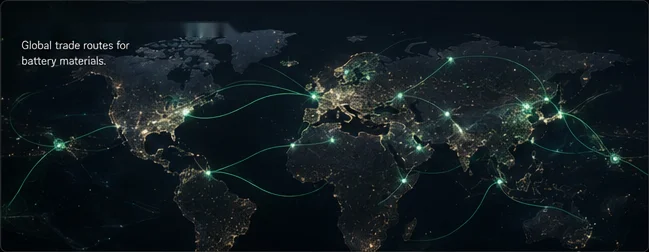
Fewer hands on the material. More value retained.
A conventional route moves battery materials through a sequence of intermediaries — a collector, an aggregator, one trader, perhaps a second — before the material reaches a facility that can actually process it. Every handler in that chain adds a handling cost, takes a margin, and frays the provenance trail a little further at each transfer. Direct-to-source collapses that into a single, deliberate route to the processor that values the grade most.
Conventional chain
- Material passes through multiple handlers.
- Each handler takes a margin along the way.
- Extra handling adds cost and movement risk.
- The thread of provenance is easily lost.
Direct-to-source
- One optimised route to the chosen processor.
- Routed to the facility that pays best for that grade.
- Less handling, lower cost, fewer points of failure.
- Chain-of-custody held intact, source to processor.
Structural comparison only — no figures implied. The route and its economics are agreed per trade and confirmed in contract.
Routing direct is not about removing links for their own sake. The processor that pays best for a given chemistry is rarely the nearest one, and sub-scale parcels often cannot reach a refiner on their own terms at all. RAW TG's role is to read the grade, identify where it is worth most, consolidate where volume is needed, and build the one route that gets it there intact. See how the recycling network and aggregation work, or read how a trade is structured and funded.
Lithium is Class 9 dangerous goods. It is moved that way.
Transporting battery materials is not ordinary freight. Lithium cells and batteries are classified as Class 9 dangerous goods, and damaged, defective or recalled (DDR) items are subject to stricter packaging and special provisions again. Mixed states of charge, compromised cells and inadequate packaging are genuine fire and thermal-runaway hazards — and they are treated as such on every movement.
Each consignment moves under the dangerous-goods framework that fits its mode of transport. Road movements broadly follow ADR, rail RID, sea the IMDG Code and air the IATA Dangerous Goods Regulations. Within those frameworks the controlling details are the same ones that decide whether a load is safe: correct UN classification, UN-approved packaging, state-of-charge considerations, and procedures built around the risk of thermal runaway and fire.
RAW TG describes competence in arranging these movements — appropriate classification, packaging and handling for the material and the route. We do not claim that competence removes the inherent hazards of the goods, and counterparties remain responsible for their own classifications and obligations.
| UN number | What it covers |
|---|---|
| UN3480 | Lithium-ion batteries shipped on their own |
| UN3481 | Lithium-ion batteries in, or packed with, equipment |
| UN3090 | Lithium-metal batteries shipped on their own |
| UN3091 | Lithium-metal batteries in, or packed with, equipment |
UN numbers and modal frameworks are given as industry context. Classification of any specific consignment is confirmed case by case; RAW TG does not claim to hold dangerous-goods approvals on a counterparty's behalf.
The movement, handled end to end.
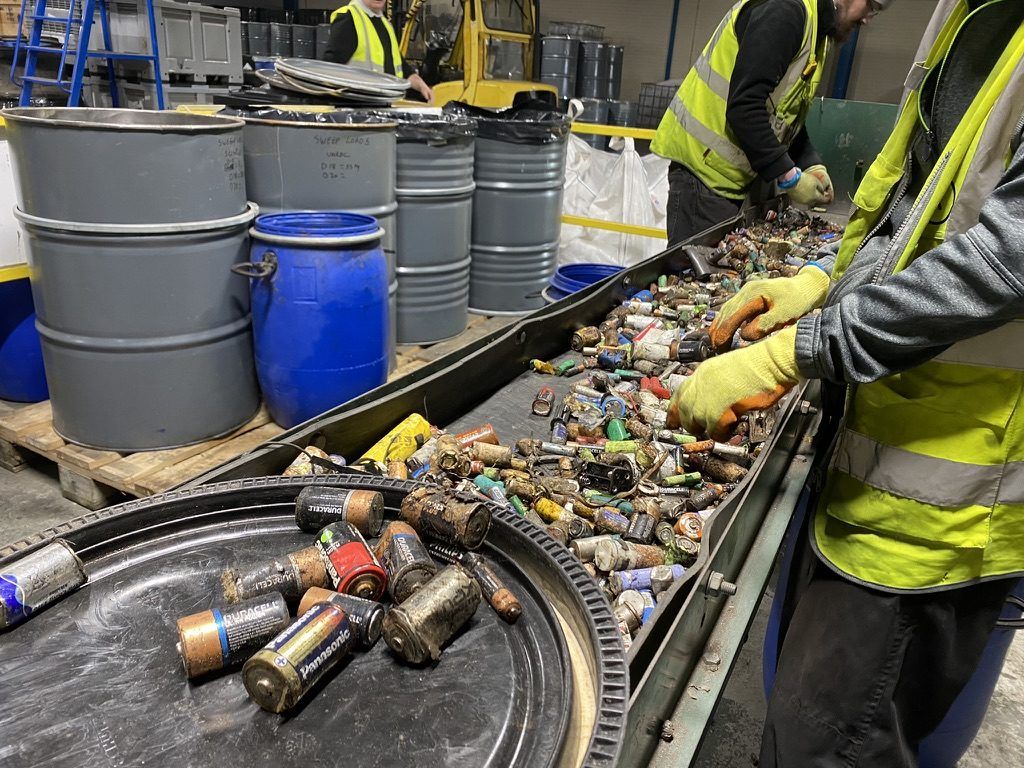
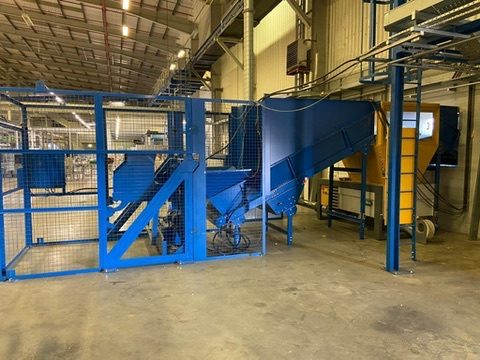
From the holder's site to the processor's gate, the operational detail of moving battery materials is managed as part of the trade — not handed off to a chain of subcontractors the counterparties never see.
Route optimisation
The most efficient path to the chosen processor — balancing cost, transit and the grade's destination.
Consolidation
Smaller parcels combined into refiner-grade volume, scheduled and dispatched as one movement.
Export & import documentation
Cross-border paperwork prepared and handled so consignments move with the documentation they need.
Dangerous-goods handling
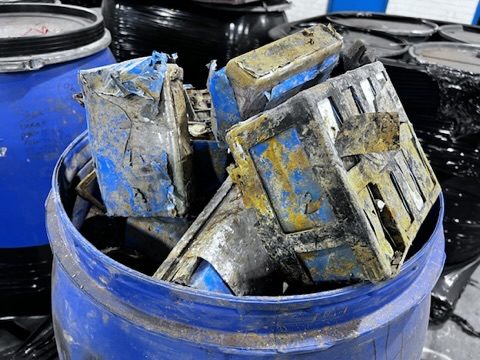
Battery materials carry genuine transport hazards. Movement is arranged with the appropriate dangerous-goods handling.
Movement scheduling
Dispatch and delivery scheduled around the trade, so material moves when both sides are ready for it.
Documented per consignment
Each movement is recorded on our digital platform — an auditable trail that travels with the material.
Shredded intermediate is a moving regulatory target.
Black mass — the shredded, mixed intermediate left after batteries are mechanically processed — sits in an evolving area of classification.
Depending on its composition, black mass may be controlled as a hazardous waste, as an environmentally hazardous substance, or both, and the controls on moving it across borders have been tightening internationally. RAW TG's position here is deliberately careful: we describe a capability to handle and document these movements and to prepare the paperwork they require — not a ruling on how any given material should be classified.
Because the picture is shifting, the practical answer is to treat documentation as something that travels with the material from the outset, so a movement can stand up to scrutiny under whichever regime applies. See compliance & traceability for how the cross-border regime is structured.
What we commit to
- Handling and documentation capability for intermediate grades.
- Paperwork prepared to suit the route and the prevailing controls.
- No claim of regulatory approval or a classification ruling.
UK, EU and international movements — documentation handled as part of the route.
A grade that is worth most at a facility three borders away is only worth more if it can actually get there. Cross-border movement is arranged as a documentation and handling capability, built into the route rather than bolted on afterwards.
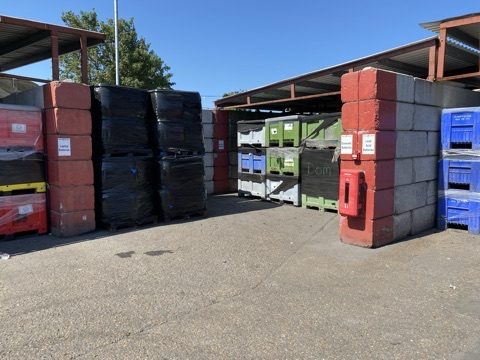
Cross-border movement is arranged as a documentation and handling capability. It is not a claim of regulatory approval or guaranteed compliance; counterparties remain responsible for their own classifications and obligations. The cross-border regime itself is summarised on the compliance page.
Logistics — answered.
Can you handle hazardous classifications?
Yes. Lithium cells and batteries are Class 9 dangerous goods, and movements are arranged with the dangerous-goods handling appropriate to the material and the mode of transport — broadly ADR for road, RID for rail, the IMDG Code for sea and the IATA Dangerous Goods Regulations for air. Movement is planned around correct UN classification, UN-approved packaging and state-of-charge considerations for each consignment. We describe this as a handling capability, not a regulatory approval.
Do you arrange export and import paperwork?
Yes. Export and import documentation for cross-border movements is prepared and handled as part of the route. Where a movement is notifiable, that broadly involves prior written notification and consent from the relevant competent authorities before material moves. This is a documentation capability, not a claim of regulatory approval — counterparties remain responsible for their own legal obligations. See the cross-border regime explained.
Who carries transit risk?
Transit risk allocation is set out in the trade terms. Payment is staged so the majority is released on the Bill of Lading and the balance on inspection, with rejection liability structured onto the recycler. See how a trade works.
What about damaged, defective or recalled (DDR) cells?
DDR items are treated as a distinct, higher-risk category. They are subject to stricter packaging and special provisions, because damaged or compromised cells carry a materially greater risk of thermal runaway. Where a consignment includes such items, the packaging and handling are arranged accordingly, and the material is documented for what it is rather than averaged in with sound stock.
Can you ship black mass and shredded intermediate?
We can handle and document these movements. Black mass classification is an evolving area — depending on composition it may be controlled as a hazardous waste, as an environmentally hazardous substance, or both — and cross-border controls have been tightening internationally. RAW TG prepares the documentation a movement requires for the route and the prevailing controls; it does not issue a classification ruling on the material itself.
Can you move small or irregular parcels?
Yes. Smaller parcels can be consolidated into a single refiner-grade movement, so sub-scale or irregular volumes still reach the processor efficiently. See the recycling network & aggregation.
Get a route for your material.
Tell us what you're moving and from where — we'll plan the route to the processor that values it most.
hello@rawbatt.com · +44 203 855 2018 · we reply within two working days