You're holding battery material. Getting paid for it shouldn't be slow, uncertain or risky.
End-of-life battery material is valuable — but selling it is usually slow, fragmented and exposed: uncertain buyers, payment on trust, and the fear of a rejection coming back on you. RAW TG gives you a contracted buyer, the majority paid on shipment, and rejection risk structured onto the refiner.
Material in the yard is money you can't yet bank.
Every parcel of battery material has real value in it — contained nickel, cobalt, copper and lithium. Turning that into a clean, paid sale is the hard part.
For most upstream holders the route to market is fragmented and exposed. Buyers come and go, so you chase a home for the material each time rather than relying on a standing route. Payment usually rests on trust and arrives well after the material has left your site. And if the receiving plant rejects a load on specification, the cost and the headache tend to land straight back on you — even though the material is long gone.
Volume makes it worse, not better. A single parcel, or an irregular arising of a few tonnes, is rarely enough to interest a Tier-1 refiner directly, so it sits, degrades or moves at a discount through intermediaries who each take a margin. Production scrap, end-of-life cells and black mass all face the same wall: too small, too inconsistent, or too unproven to reach the processor that would actually pay the most for it.
RAW TG is built to remove each of those frictions. You get a contracted buyer matched before the material moves, the majority of value paid against the Bill of Lading, rejection liability structured onto the refiner, and smaller parcels aggregated into refiner-grade lots. The sections below set out exactly how that works and what we'll need from you.
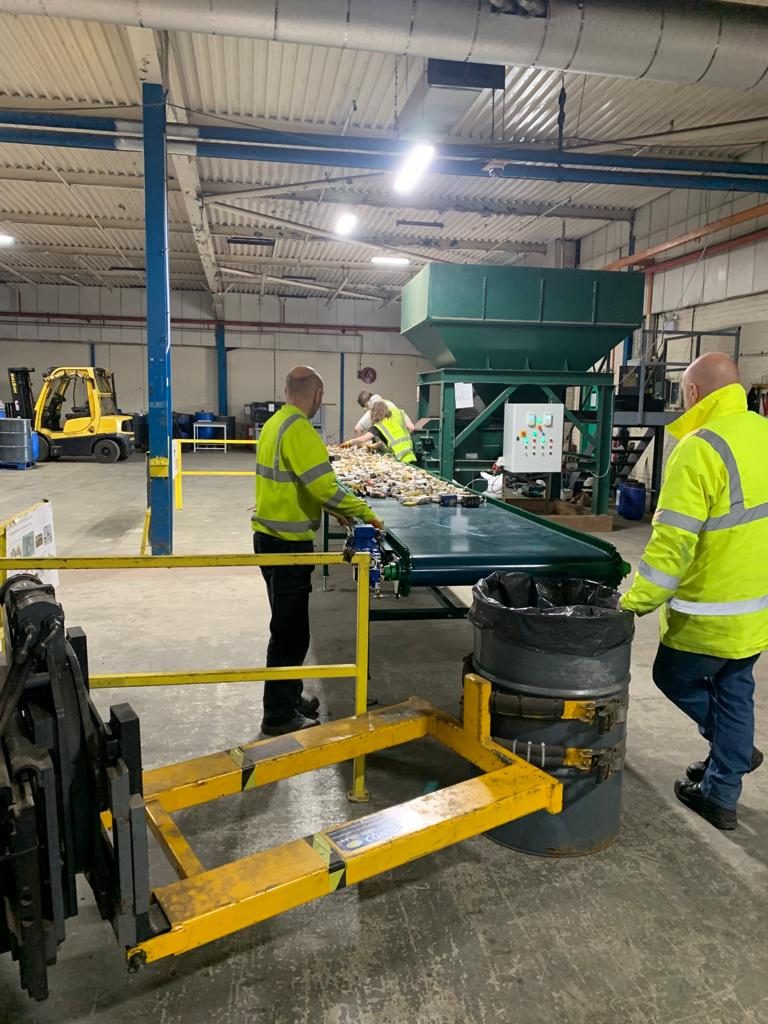
The broken route between holders and processors.
This is the gap RAW TG closes for suppliers: ungraded, irregular material on one side; refiner demand for consistent, documented feedstock on the other.
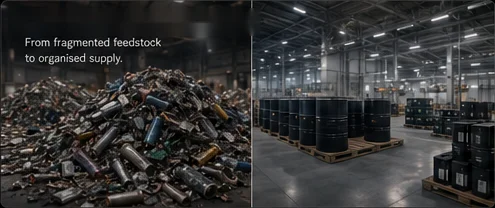
The old way of selling material — and the way it should work.
Most upstream sellers carry slow payment and rejection risk. The RAW TG structure is built to take both off you.
The old way
- Uncertain buyers — chasing a home for the material each time.
- Payment on trust, often well after the material has gone.
- Rejection on specification comes back on you.
- Documentation and movement left for you to sort out.
With RAW TG
- A contracted buyer matched before the material moves.
- The majority of payment released against the Bill of Lading.
- Rejection liability structured onto the refiner under the terms.
- Documentation and movement handled end to end.
Indicative structure. Exact terms are agreed per trade and confirmed in contract.
The material we'll move for you.
From clean factory offcuts to mixed end-of-life packs to shredded black mass — across the main lithium-ion chemistries and nickel-metal hydride. If your material isn't shown here, ask; the list is a guide, not a limit.
Production & manufacturing scrap
Gigafactory offcuts and off-spec cells — clean, high-value and a growing arising. We grade it and match it to the refiner that pays best for the contained metal, aggregating smaller runs into refiner-grade lots.
How we source & matchEnd-of-life cells, modules & packs
Whole cells, modules, packs and ESS units carry handling and dangerous-goods obligations. We classify, document and ship them direct to the processor equipped for that format — the movement and paperwork handled as one.
How we move itBlack mass
The shredded intermediate, where value is set by Ni/Co/Mn/Li assay, moisture and contamination. We establish those before contracting and route it where the chemistry is valued correctly — including LFP, which carries no nickel or cobalt.
How we grade & matchIf you hold battery material, this desk is for you.
We work with upstream holders of every size — from one-off parcels to regular arisings. Small and irregular volumes are normal, not a problem.
What we'll need from you
- A rough volume — a single parcel or a recurring quantity.
- Chemistry or material type, if you know it.
- Location, so we can plan the movement.
- Frequency — one-off, or an ongoing arising.
Don't have all of this? Tell us what you do know and we'll take it from there.
The majority on shipment — not on an open promise.
Selling material to RAW TG is built to be predictable, so you can plan around it rather than chase a buyer each time.
The trade is structured so value reaches you early and on a defined trigger. The majority is released against the Bill of Lading once the goods are confirmed shipped, and the balance settles on confirmed inspection at destination. You are not waiting on an open promise weeks after the material has gone.
- The majority paid against the Bill of Lading on shipment.
- Rejection liability structured onto the refiner, not you.
- Smaller or irregular parcels aggregated to refiner-grade volume.
- Documentation, movement and digital duty of care handled for you.
Rejection liability sits with the recycler.
If material is rejected on inspection, that liability rests with the refiner under the trade terms — not with you and not with RAW TG. It's the structural point that removes the downside that normally deters sellers.
Every trade is documented on our platform: digital duty of care, chain-of-custody and an auditable movement record per consignment. See compliance & traceability →
What happens when you enquire.
A short, disciplined process. We'll establish fit before anything else — no obligation to proceed.
Enquiry received
You tell us what you're holding — material, rough volume, location and frequency. No commitment at this stage.
Short qualifying call
A brief call to understand the material and confirm fit. We establish whether and how we can route it to the right processor.
Indicative terms
Where there's a fit, we set out indicative terms and a capability pack so you can decide with the full picture in front of you.
What suppliers ask us.
My volumes are small or irregular.
That's normal. We aggregate smaller and irregular parcels into refiner-grade volume, so material that wouldn't move on its own still finds the right route. Tell us what you have and how often. See the recycling network.
My material isn't graded.
We characterise and grade material as part of the process — chemistry, contained metal, moisture and contamination established before it moves. You don't need to have done the testing yourself.
How do I know I'll be paid?
Payment is staged against shipping milestones: the majority is released against the Bill of Lading when the goods are confirmed shipped, and the balance settles on confirmed inspection at destination. The exact triggers are set out in each trade contract. See how a trade works.
What about rejection?
Under the trade structure, rejection liability rests with the refiner — not with you or RAW TG. Rejection is assessed against an agreed specification, with the grounds and process defined in the terms before material moves.
Do you take title to the material?
Sometimes. RAW TG acts as principal when it takes title and as facilitator when it arranges the trade between parties — which role applies is agreed per trade and confirmed in contract. Either way you deal with one counterparty. See the recycling network.
Can you handle international movement?
Yes — UK, EU and international. Dangerous-goods classification, consolidation and cross-border documentation are handled as part of the route, so the material ships direct to the optimal processor with the paperwork in order. See logistics & direct-to-source.
An indicative bid within 48 hours.
Tell us what you're holding — you'll get an indicative range within two working days, and a firm offer once we've seen assay or samples.
1What is it?
2Chemistry, if known
3Where is it?
This opens a pre-filled email — attach photos (wide shot, close-up, labels, packaging) and any assay data before sending. See the acceptance & packaging guide for what earns the best number.
Get a route for your material
Tell us what you're holding — material, rough volume and location. No hard sell; we'll establish fit first.
hello@rawbatt.com · +44 203 855 2018 · we reply within two working days